Guide
A pentest communication plan: who hears what, and when
A pentest communication plan sets how information moves during the test. It covers routine updates, urgent findings, pause requests and the final handover, so nobody is surprised.
- Fixed fee before we start
- Named tester in writing
- Retest and attestation letter
Why a pentest communication plan matters
During testing, several groups need different information. Engineers need findings. Operations needs to know about planned activity. Meanwhile, leadership needs a short status.
Without a plan, messages go to the wrong person or arrive late. So agree the routes before day one.
The parts of a pentest communication plan
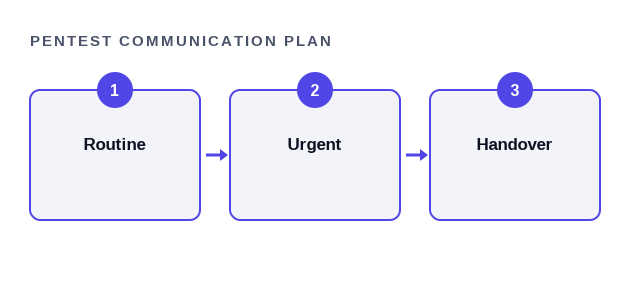
Most plans have four parts. Routine updates, urgent findings, pause and stop, and the report handover. Each part names a sender, a receiver, a route and a time.
In addition, list backups. Because people travel and fall ill, every role needs a second name.
| Message | Sender to receiver | Timing |
|---|---|---|
| Routine status | Tester to technical contact | Daily, in writing |
| Urgent finding | Tester to escalation contact | As soon as confirmed |
| Pause request | Buyer to tester | Immediately |
| Internal notice | Technical contact to operations | Before testing starts |
| Report handover | Firm to project owner | On the agreed date |
Pentest communication plan check
Tick each route already agreed.
Your result appears here as you tick, so you can see what is still open.
Urgent findings in the pentest communication plan
Some findings should not wait for the report. So agree what counts as urgent and how fast it is reported. Then name who decides on immediate action.
Also keep urgent messages short and private. Share detail only with the people who will act on it.
Internal notices
Tell the teams that watch your systems before testing starts. Give them the window and a contact. Then they can tell planned activity apart from a real incident.
In addition, decide how widely to announce the test. Some companies tell only a few people. That is a choice for the owner.
Closing the pentest communication plan
The plan ends with the report handover and a short review session. Then the remediation owner takes over.
Finally, keep the plan with the engagement file. It becomes the template for the next test.
How Thornbury runs it
We agree the communication plan at the kickoff meeting, and the named tester sends written status updates during testing. Packages start at $5,900 for one asset and $14,500 for up to three, and $29,000 covers a broader scope with two retests inside 60 days. Each includes a named tester in writing, a report within 10 working days, an attestation letter and a retest. Testing is delivered by vetted third-party practitioners, and method references include NIST SP 800-115.
Pentest communication plan questions
Who writes the pentest communication plan?
Usually the firm drafts it and the buyer adds names and backups.
How often should status updates arrive?
Daily is common for short tests.
What counts as an urgent finding?
Agree it in advance, usually issues that need action before the report.
Does the pentest communication plan include the report review?
Yes, it usually ends with the handover and a review session.
Related guides
Agree a pentest communication plan with your quote
Send your brief through the form on our home page. We reply with a fixed fee and a proposed window.
Get my fixed-fee quote