Guide
A pentest scope change, handled in writing
A pentest scope change happens when the systems to be tested differ from the signed scope. It is normal, but it must be agreed in writing, because the scope is also the authorization.
- Fixed fee before we start
- Named tester in writing
- Retest and attestation letter
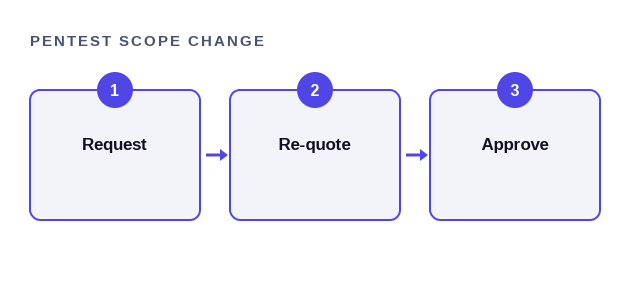
What triggers a pentest scope change
Common triggers are a new feature, an extra environment or a system that turns out to be larger than expected. Sometimes the requester changes the requirement.
So expect at least one question about scope in most engagements. The goal is not to avoid change but to handle it cleanly.
Why it must be in writing
The signed scope is the written authorization. Testing a system outside it, even with good intentions, has no authorization behind it. Therefore, every addition needs a signed update first.
Also, the change affects the fee and the dates. A written record avoids disputes later.
| Step | Who acts |
|---|---|
| Change requested | Buyer or tester |
| Impact stated | Firm: fee, days and dates |
| Approval | Buyer's signer |
| Scope updated | Both sides sign |
| Testing continues | Tester |
Pentest scope change check
Tick what your process already requires.
Your result appears here as you tick, so you can see what is still open.
How a pentest scope change affects the fixed fee
A fixed fee covers a fixed scope. So an addition usually means a written re-quote before work continues. A removal may reduce the fee, depending on the timing.
In addition, check the dates. Extra scope may need extra testing days, which can move the report date.
Changes the tester may raise
Sometimes the tester finds a system that looks related but is not on the list. In that case, they should pause and ask. They should not test it.
Then you decide. Either add it with a signed update or leave it for a later engagement.
Recording a pentest scope change in the report
The report should describe the final scope. So it lists additions and removals, with dates. Auditors can then see exactly what was covered.
Also keep each signed update with the original scope. Together, they are the full authorization record.
How Thornbury handles it
Our fee is fixed before we start. If the scope changes, we send a written re-quote, and nothing new is tested until you sign it. Packages start at $5,900 for one asset and $14,500 for up to three, and $29,000 covers a broader scope with two retests inside 60 days. Each includes a named tester in writing, a report within 10 working days, an attestation letter and a retest. Testing is delivered by vetted third-party practitioners, and method references include NIST SP 800-115.
Pentest scope change questions
Does a pentest scope change always cost more?
Additions usually do. Removals may reduce the fee, depending on timing.
Who approves a pentest scope change?
Someone with authority over the added systems, usually the original signer.
Can the tester add a system on their own?
No. They should pause and ask, because it is not authorized.
Will a pentest scope change delay the report?
It can, if extra testing days are needed.
Related guides
Get a fixed fee that handles a pentest scope change
Send your brief through the form on our home page. We reply with a fixed fee, usually within four working hours.
Get my fixed-fee quote